 EN
EN
 FR
FR
 DE
DE
Ayurveda Panchakarma Therapy (For Men & Women)
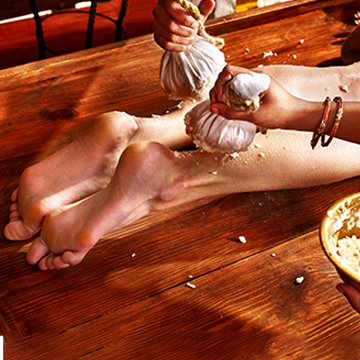
Ayurveda emphasizes preventative and healing therapies along with various methods of purification and rejuvenation. Ayurveda is more than a mere healing system; it is a science and an art of appropriate living that helps to achieve longevity. It can guide every individual in the proper choice of diet, living habits and exercise to restore balance in the body, mind and consciousness, thus preventing disease from gaining a foothold in the system.
According to Ayurveda, every human being is a unique phenomenon of cosmic consciousness, manifested through the five basic elements—Ether, Air, Fire, Water and Earth. Vata—a combination of ether and air, pitta—a combination of fire and water, and kapha—a combination of water and earth, are called the tridosha. These are the three humors or the three organizations of the body, which are also derived from consciousness. Each individual constitution or psycho-somatic temperament is determined by the relative proportions of these three doshas at the time of fertilization.
When the embryo is formed, the constitution is determined. There are seven basic constitutions with one or more doshas predominant according to Ayurveda. They are: vata, pitta or kapha predominant, vata-pitta, pitta- kapha or kapha-vata predominant and vata-pitta-kapha in equal balance, a rare occurrence.
Every individual constitution has its own unique balance of vata, pitta and kapha (VPK) according to its own nature. This balance of VPK is the natural order. When this doshic balance is disturbed, it creates imbalance, which is disorder. Health is order; disease is disorder. Within the body there is a constant interaction between order and disorder, thus once one understands the nature and structure of disorder, one can re-establish order. Ayurveda believes that order lies within disorder.
Order is the state of health, as defined by Ayurveda. This exists when the digestive fire (agni) is in a balanced condition; the bodily humors (vata, pitta and kapha) are in equilibrium, the three waste products (urine, feces and sweat) are produced and eliminated normally, the seven bodily tissues (rasa, rakta, mamsa, meda, asthi, majja and shukra/artava) are functioning normally, and the mind, senses and consciousness are working harmoniously together. When the balance of these systems is disturbed, the disease (disorder) process begins.
The internal environment is governed by vata, pitta and kapha, which are constantly reacting to the external environment. The wrong diet, habits, lifestyle, incompatible food combinations (e.g., milk and fish, melons and grain, yogurt and meat or eating cooked honey, etc.), seasonal changes, repressed emotions and stress factors can all act either together or separately to change the balance of vata, pitta and kapha. According to the nature of the cause, vata, pitta or kapha undergo aggravation or derangement, which affects the agni (gastric fire) and produces ama (toxins).
This ama enters the blood stream and is circulated throughout the body, clogging the channels. Retention of toxins in the blood results in toxemia. This accumulated toxicity, once well established, will slowly affect prana (vital life energy), ojas (immunity), and tejas (cellular metabolic energy), resulting in disease. This can be nature’s effort to eliminate toxicity from the body. Every so-called disease is a crisis of ama toxicity. Ama is the basic internal cause of all disease, due to the aggravated doshas.
Herein lies the key to the prevention of disease: help the body eliminate the toxins. To stop the further production of ama, Ayurvedic literature suggests putting the person on a proper diet with appropriate lifestyle, habits and exercise, and administering a proper cleansing program such as panchakarma. (Although panchakarma is often thought of as the entire procedure, it really is only one part of a group of therapies belonging to a class of cleansing procedures called shodana. There is also a group of milder techniques called shamana for those not strong enough for shodana.)
Purvakarma: Pre-purification Measures
Before the actual operation of purification begins, there is a need to prepare the body with prescribed methods to encourage it to let go of the toxins. These two procedures are snehan and svedana. Snehan is the oil massage. Oil is applied to the entire body with a particular type of massage that helps the toxins to move towards the gastrointestinal tract. Oil massage also makes the superficial and deep tissues soft and supple, thus helping to remove stress and nourish the nervous system. Snehan is given daily for three to seven days, as indicated. Svedana is sudation or sweating and is given every day immediately following the snehan. An herbal concoction may be added to the steam to further loosen the toxins from the individual. Svedana liquefies the toxins and increases the movement of toxins into the gastrointestinal tract. After three to seven days of snehan and svedana, the doshas become well “ripened.” A particular panchakarma method is then given according to the individual’s constitution and disorder, prakruti and vikruti, respectively.
Five Basic Shodanas: Cleansing Methods
- Vamana: therapeutic vomiting or emesis
- Virechan: purgation
- Basti: enema
- Nasya: elimination of toxins through the nose
- Rakta Moksha: detoxification of the blood
-
Vamana: Emesis Therapy
When there is congestion in the lungs causing repeated attacks of bronchitis, colds, cough or asthma, the Ayurvedic treatment is therapeutic vomiting, vamana, to eliminate the kapha causing the excess mucus. Often times this also releases repressed emotions that have been held in the kapha areas of the lungs and stomach along with the accumulated dosha. Once the mucus is released, the patient will feel instantly relieved. It is likely that congestion, wheezing and breathlessness will disappear and that the sinuses will become clear. Therapeutic vomiting is also indicated in chronic asthma, diabetes, chronic cold, lymphatic congestion, chronic indigestion and edema.
After vamana, resting, fasting, smoking certain herbal cigarettes, and not suppressing natural urges (i.e., urination, defecation, gas, sneezing, coughing) is recommended. If vamana is administered properly, the person should feel relaxation in the lungs, will be able to breathe freely, will have lightness in the chest, clear thinking, a clear voice, a good appetite, and all symptoms of congestion disappear.
-
Virechan: Purgation Therapy
When excess bile, pitta, is secreted and accumulated in the gall bladder, liver and small intestine, it tends to result in rashes, skin inflammation, acne, chronic attacks of fever, biliary vomiting, nausea and jaundice. Ayurvedic literature suggests in these conditions the administration of therapeutic purgation or a therapeutic laxative. Purgatives help relieve the excess pitta causing the bile disturbance in the body. In fact, purgatives can completely cure the problem of excess pitta. When purgatives are used, the patient should not eat foods that will aggravate the predominant humor or cause the three humors to become unbalanced.
-
Basti: Enema Therapy
Vata is a very active principle in pathogenesis (disease). If we can control vata through the use of basti, we have gone a long way in going to the root cause of the vast majority of diseases. Vata is the main etiological (causal) factor in the manifestation of diseases. It is the motive force behind the elimination and retention of feces, urine, bile and other excreta. Vata is mainly located in the large intestine, but bone tissue (asthi dhatu) is also a site for vata. Hence the medication administered rectally effects asthi dhatu. The mucus membrane of the colon is related to the outer covering of the bones (periosteum), which nourishes the bones. Therefore, any medication given rectally goes into the deeper tissues, like bones, and corrects vata disorders.
-
Nasya: Nasal Administration
The nose is the doorway to the brain and it is also the doorway to consciousness. The nasal administration of medication is called nasya. An excess of bodily humors accumulated in the sinus, throat, nose or head areas is eliminated by means of the nearest possible opening, the nose.
Prana, life force as nerve energy, enters the body through the breath taken in through the nose. Prana is in the brain and maintains sensory and motor functions. Prana also governs mental activities, memory, concentration and intellectual activities. Deranged prana creates defective functioning of all these activities and produces headaches, convulsions, loss of memory and reduced sensory perception. Thus nasal administration, nasya, is indicated for prana disorders, sinus congestion, migraine headaches, convulsions and certain eye and ear problems.
Breathing also can be improved through nasal massage. For this treatment, the little finger is dipped into ghee and inserted into the nose. The inner walls of the nose are slowly massaged, going as deeply as possible. This treatment will help to open the emotions. (Nose tissue is tender and for this application the fingernail must be kept short to avoid injuring the delicate mucus membranes.) Since most people have a deviated nasal septum, one side of the nose will be easier to penetrate and massage than the other. The finger should not be inserted forcibly. The massage should proceed by slow penetration, the finger moving first in a clockwise and then counter-clockwise direction. By this means, the emotions that are blocked in the respiratory tract will be released. One may use this treatment each morning and evening. In this way, breathing patterns will change as the emotions are released and the eyesight also will improve.
References
- A Practical Handbook of Panchakarma Procedures Prof. G. S. Lavekar. ( Reprint 2020 )
- Screen Shot
- Yoga - A Healing way of Living Secondary Stage.NCERT.
- Yoga for Health - N. S. Ravishankar
- Ayurveda - A Brief Introduction and Guide By - Vasant Lad, B.A.M.S, M.A.Sc
- An Introduction to Panchakarma By - Vasant Lad, B.A.M.S, M.A.Sc