 EN
EN
 FR
FR
 DE
DE
Therapeutic Yoga (For Men, Women & Children)
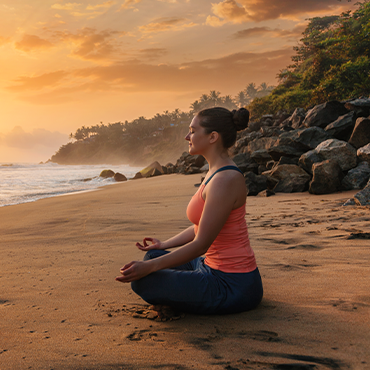
Yoga comprises a wide range of mind / body practices, ranging from postural and breathing exercises to deep relaxation and meditation. Yoga therapy tailors these to the health needs of individuals. It promotes all round total health, as well as helping particular medical conditions. Yoga offers an excellent training program for the purpose of maintaining one’s health. Regular practice of yoga, for minimum 30 to 45 minutes daily, helps not only in developing physical fitness but also, in preventing the occurrence of many such ailments which invariably result from the hectic pace of modern lifestyle.
The fundamental idea behind the practise of yoga is to unite the individual self ( Jiva ) with the supreme or pure consciousness ( Brahma ). The factual connotation of Yoga is unification. Merging in this static realism liberates the spirit from all sense of separation. It liberates the mind of the ignorance of time, space and causation. However, as Yogic philosophy says, the human body and mind are parts of the deceptive world of matter, with a limited period, whereas the spirit is endlessans passes into a new world when this body dies. Therefore, fundamental to Yogic philosophy are the concepts of Karma- cause and effect relationship.
In the present view, Yoga is one of the most helpful and healthy forms of experience to manage the influence of thinking by turning psychological and physical force into spiritual energy. Yoga therapy eases oneself from the cramped tension. Concentration is enhanced by Yoga. Yoga therapy cures all diseases and controls the aging process.
There are clues to how Yoga improves health in a number of Yoga texts, including the Hatha Yoga Pradipika, Patanjali’s Yoga Sutra and the Bhagavad-Gita. For example, the Hatha Yoga Pradipika states in chapter 1, Sutra 17, that “postures (asana) give one steadiness (firmness)of body and mind, lightness (flexibility) of the limbs, and absence of disease.” The Hatha Yoga Pradipika also states that postures such as Matsyendrasana and Paschimottanasana can increase the digestive fire to such an incredible capacity that they can remove diseases.
Benefits of Yoga Therapy
There are two types of benefits of yoga. One is preventive and another is Curative.
Yoga therapy helps to carry natural regulation and controls to the neuro-hormones and metabolism in the body. At the same time yoga therapy improves endocrine metabolism and provides a precautionary shelter. The Yogic exercise rinses body, mind and soul by venting toxins from the body. The most important benefit of yoga is physical and mental therapy. The aging process, which is largely an artificial condition, caused mainly by autointoxication or self-poisoning, can be slowed down by practicing yoga. By keeping the body clean, flexible and well lubricated, we can significantly reduce the catabolic process of cell deterioration. To get the maximum benefits of yoga one has to combine the practices of yogasanas, Pranayama, meditation and shatkriyas. Regular practice of asanas, pranayama and meditation can help such diverse ailments such as diabetes, blood pressure, digestive disorders, arthritis, arteriosclerosis, chronic fatigue, asthma, varicose veins and heart conditions. Laboratory tests have proved the yogi’s increased abilities of consciously controlling autonomic or involuntary functions, such as temperature, heartbeat, and blood pressure. Research into the effect of yogic practices on HIV is currently underway with promising results.
According to medical scientists, yoga therapy is successful because of the balance created in the nervous and endocrine systems which directly influences all the other systems and organs of the body. Yoga acts both as a curative and preventive therapy. The very essence of yoga lies in attaining mental peace, improved concentration powers, a relaxed state of living and harmony in relationships. Through the practise of yoga, we become aware of the interconnectedness between our emotional, mental and physical levels. Gradually this awareness leads to an understanding of the more subtle areas of existence. The ultimate goal of yoga is to make it possible for one to be able to fuse together the gross materials (annamaya), physical (pranamaya), mental (manomaya), intellectual (vijnanamaya) and spiritual (anandamaya) levels within their being.
Physiological Benefits
Physicians and scientists are discovering brand new health benefits of yoga everydays. Studies show it can relieve the symptoms of several common and potentially life-threatening illnesses such as arthritis, arteriosclerosis, chronic fatigue, diabetes, AIDS, asthma and obesity. Releases chronic tension throughout the body, Helps relieve stress and stress related conditions throughout the body, Helps to alleviate neck and back pain, Helps to balance the immune system.
Regular yoga practice creates mental clarity and calmness, increase body awareness, relieves chronic stress patterns, relaxes and quiets the mind, centers attention and sharpens concentration.
Self-Awareness
Yoga strives to increase Self-awarness on both a physical and psychological level. Patients who study yoga learn to induce relaxation and then to use the technical whenever pain appears. Practicing yoga can provide chronic pain sufferers with useful tools to actively cope with their pain counter feelings of helplessness and depression.
Mental Performance
A common technique used in yoda is breathing through one nostril at a time. Electroencephalogram (EEG) Studies of the electrical impulses of the brain have shown that breathing through one nostril may help improve communication between the right and left side of the brain. Studies have also shown that this increased brain activity is associated with better performance and doctors even suggest that yoga can enhance cognitive performance.
Mood Change and Vitality
Mental health and physical energy are difficult to quantify, but virtually everyone who participates in yoga over a period of time reports a positive effect on outlook and energy level. Yogic stretching and breathing exercises have been seen to result in an invigorating effect on both mental and physical energy and improved mood.
Spiritual Benefits
When one achieves the yogic spirit, they can knowing themselves at peace. The value of discovering one‟s self as is begins a journey into being rather than doing. Life can then be lived practicing “yoga off the mat”. Yoga is one among the six systems of Vedic philosophy. Maharishi Patanjali, rightly called “The Father of Yoga” compiled and refined various aspects of Yoga systematically in his “Yoga Sutras”(aphorisms). He advocated the eight fold path of Yoga, popularly known as “Ashtanga Yoga” for all round development of human personality. They are:- Yama, Niyama, Asana, Pranayama, Pratyahara, Dharana, Dhyana and Samadhi. These components advocates certain restraints and observances, physical discipline, breath regulations, restraining the sense organs, contemplation, meditation and samadhi. These steps are believed to have a potential for improvement of physical health by encouraging better circulation of oxygenated blood in the body, refraining the sense organs and thereby inducing tranquility and serenity of mind. The practice of Yoga prevents psychosomatic disorder / diseases and improves an individual‟s resistance and ability to endure stressful situations.
Components of Yoga Therapy
Yoga is considered a holistic tool that benefits you three way: body, mind, and spirit. Therefore, yoga experts attempt to reach out inside an individual in an effort to gain a better understanding of his/her condition and find ways to alter the effects of any malfunctions detected inside the body. A good yoga therapist is the key concept here. They will be providing the guidance you need in this particular journey and unless you use the correct methods at the beginning, you cannot expect success in the end.
Types of Yoga
-
Japa Yoga
To concentrate one‟s mind on divine name or holy syllable, mantra etc. like „OM‟, „Rama‟, „Allah‟, „Jesus‟, „God‟, „Guru‟, etc. through repeated recitation on remembrance.
-
Karma yoga
Teaches us to perform all actions without having any desire for their fruit. In this sadhana a Yogi considers his duty as divine action, perform it with whole hearted dedication but shuns away from all desires.
-
Jnana Yoga
Teaches us to discriminate between the self and non-self and to acquire the knowledge of one‟s spiritual entity through the study of scriptures, company of Saints and practice of meditation.
-
Bhakti Yoga
Bhakthi yoga is a system of intense devotion with emphasis on complete surrender to divine will. The true follower of Bhakti Yoga is free from egoism, humble and unaffected by the dualities of the world
-
Raja Yoga
Raja Yoga popularly known as “Ashtanga Yoga” is for all-round development of human personality. These are Yama, Niyama, Asana, Pranayama, Pratyahara, Dharana, Dhyana and Samadhi.
-
Yamas (Observances)
Practice of Yamas pave way to increase the power of concentration, mental purity and steadiness.
The following are the Yama
- Ahimsa ( not to harm others)
- Satya ( to be truthful)
- Asteya ( not to steal)
- Brahmacharya (celibacy)
- Aparigraha ( not to possess beyond actual needs)
-
Niyamas ( Restraints)
There are five Niyamas
- Shauch ( external and internal purification)
- Santosh (contentment)
- Tapa ( to make right efforts to achieve goals)
- Swadhaya ( to study authentic texts and religious scriptures correct knowledge of self and the supreme divinity)
- Ishwar Pranidhan ( complete surrender to the divine will)
A set of Asanas, Mudras and Pranayamas practiced with faith, perseverance and insight rejuvenates the brain, heart, lungs, liver, pancreas, kidney, bowels, all nerves, muscles, tissues and glands of the body by ensuring oxygenated and balanced blood supply, kindles up the appetite, bestows control over seminal fluid, senses and mind and imparts increased vitality, vigour and longevity to the practitioner.
-
Asanas ( Postures)
These are special patterns of postures that stabilize the mind and the body through static stretching. Their aim is to establish proper system in the neuromuscular tonic impulses and improve the general muscle tone. Two basic principles governing the performance of asanas are stability and comfort. This suggests that the nature of asanas is psycho neuro physical and not only physical. Every asana should be performed effortlessly and maintained for a comfortable time. There should be no jerks and the performance of asana should not lead to undue fatigue.
Asanas may be classified as:
- Meditative
- Cultural
- Relaxative
-
Meditative Asanas
Meditative Asanas are sitting postures, which maintain the body in a steady and comfortable condition. By various arrangements of the legs and hands different meditative Asanas are performed. The characteristic feature of the Meditative Asana is, however, keeping the head, neck and trunk erect.
-
Cultural Asanas
Cultural Asanas involve static stretching which brings about proper tone of muscles. They contribute to the flexibility of the spine and render the back and spinal muscles stronger. They also stimulate proper working of the vital organs in the thoracic and abdominal cavities. There are innumerable varieties of cultural Asanas, which are performed in sitting, lying and standing position.
-
Relaxative Asanas
Relaxative Asanas are few in numbers. They are performed in the lying position and are meant for giving rest to the body and mind.
-
Surya Namaskar ( Salutation to sun)
Surya Namaskar is the most useful and popular mode of Yogic exercises which briefly bestows the benefits of Asanas, Pranayama and Mudras altogether. It consists of a series of 12 postures which are performed early in the morning facing the rising Sun. Surya Namaskar energizes the entire neuro glandular and neuromuscular system of the body and its regular practice ensures a balanced supply of oxygenated blood and perfect harmony to all the systems of the body, thus invigorating the entire psychosomatic system of human constitution.
-
Pranayama ( Yogic Respiration)
These practices bring control over the respiratory impulses, which form one of the channels of the flow of autonomic nerve impulses. Holding of the breath for a prolonged and comfortable time is an essential technique of Pranayama. However, in the initial practice the breath holding phase is completely avoided and emphasis is put one the controlled inspiration and expiration with a time ratio 1:2 between them. The expiratory phase is so controlled that the following inspiratory phases is not affected in its slow and controlled inspiration. The main purpose of pranayama is to gain control over the autonomic nervous system and through its influence the mental function is also controlled and regulated. It is useful in higher yogic practices like meditation.
-
Pratyahara (Withdrawal of senses from their Objects)
It is a method for control of the mind. It is a practice for withdrawal of the senses from their respective objects. It is also a process for the prevention of mind wandering and indulgence to unhealthy thoughts, and hence, can be considered as a psychological practice.
-
Dharana ( Contemplation)
It attempts at fixation of mind on a single object or thought or sounds at any place or spot external or internal of the body is Dharana. It improves power of concentration, memory and intellect. Its regular practice results in peace, better mind-body co-ordination and balanced growth.
-
Dhyan ( Meditation)
Continuous and un-interrupted flow of mind in the same direction wherever the mind is fixed is Meditation. This is the practice involving control of the mental function which start from the initial withdrawal of the senses from external objects to the complete oblivion external environment. It is a process of absorption in which the individual tries to turn his attention to experience. It is not always safer to start ones practice in meditation without preparing adequately through Asanas and Pranayama. By regular practice of meditation one acquires the power to concentrate deep resulting in manyfold benefits such as increased physical energy, mental efficiency, creativity, calmness, memory, intellect, psychic power and intuitiveness. The basic principle of meditation is to develop internal awareness.
-
Samadhi (Enlighten State)
Samadhi literally means “completely in agreement”,also called Samapti. It is a state or superconsciousness where trio-the meditator, meditation and meditated upon become one. It is a state of bliss and oneness with immense being ( universal consciousness).Samadhi is the final state of yogic practice. In this phase there is development of mind for appreciation of yogic philosophy, for knowledge which brings salvation- object of sadhana. With the development of Samadhi, there is realization of soul-(Atma), this soul is also Paramatma such as , „AHAM is SOHAM - as the Yogi realizes he is not AHAM (physical existence) only but his existence in every being in every individual as soul. According to Patanjali Darshan – Samadhi can be achieved by the practice of Ishwar pranidhan alone i,e. complete surrender to the divine will.
-
References
- A Practical Handbook of Panchakarma Procedures Prof. G. S. Lavekar. ( Reprint 2020 )
- Screen Shot
- Yoga - A Healing way of Living Secondary Stage.NCERT.
- Yoga for Health - N. S. Ravishankar
- Ayurveda - A Brief Introduction and Guide By - Vasant Lad, B.A.M.S, M.A.Sc
- An Introduction to Panchakarma By - Vasant Lad, B.A.M.S, M.A.Sc